What You Pay
Most of the doors we work on in Grand Prairie went up when the neighborhood was built out around 1991, and a good share of them are still running the steel rollers that came with the house. Nobody swaps rollers on a schedule - they get replaced when they seize, when they scream on the way up, or when the track wears a groove the roller can't ride anymore. So what you pay comes down to how many rollers need swapping (a full set of ten runs more than the two or three that usually fail first), whether you want steel or nylon, and whether the track has to come off and get straightened. We drive the 16 miles out from Dallas for this work, and that travel is part of the job cost, not a separate call-out fee tacked onto a local branch, because there isn't one here. Ask for a number based on what's actually wrong with your rollers and track, not a flat rate quoted over the phone.
The Symptom
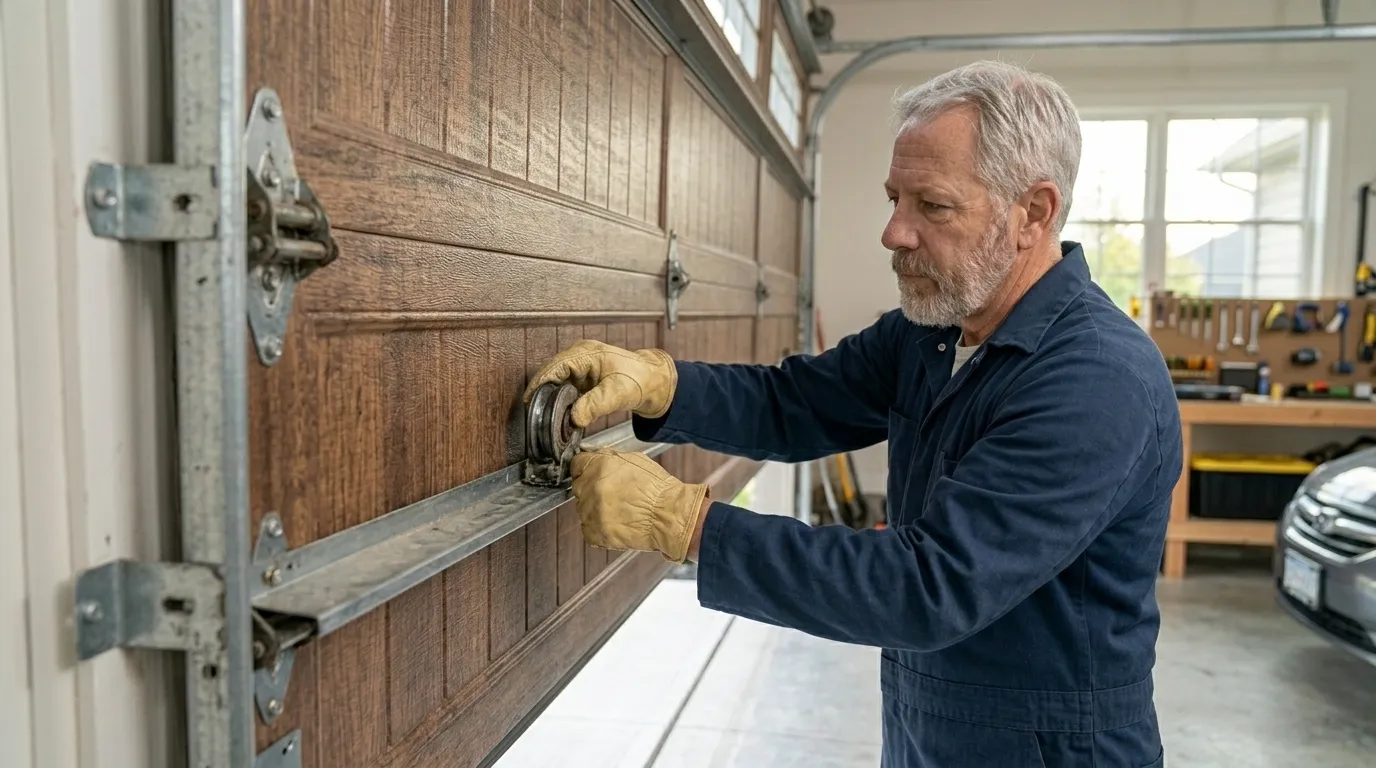
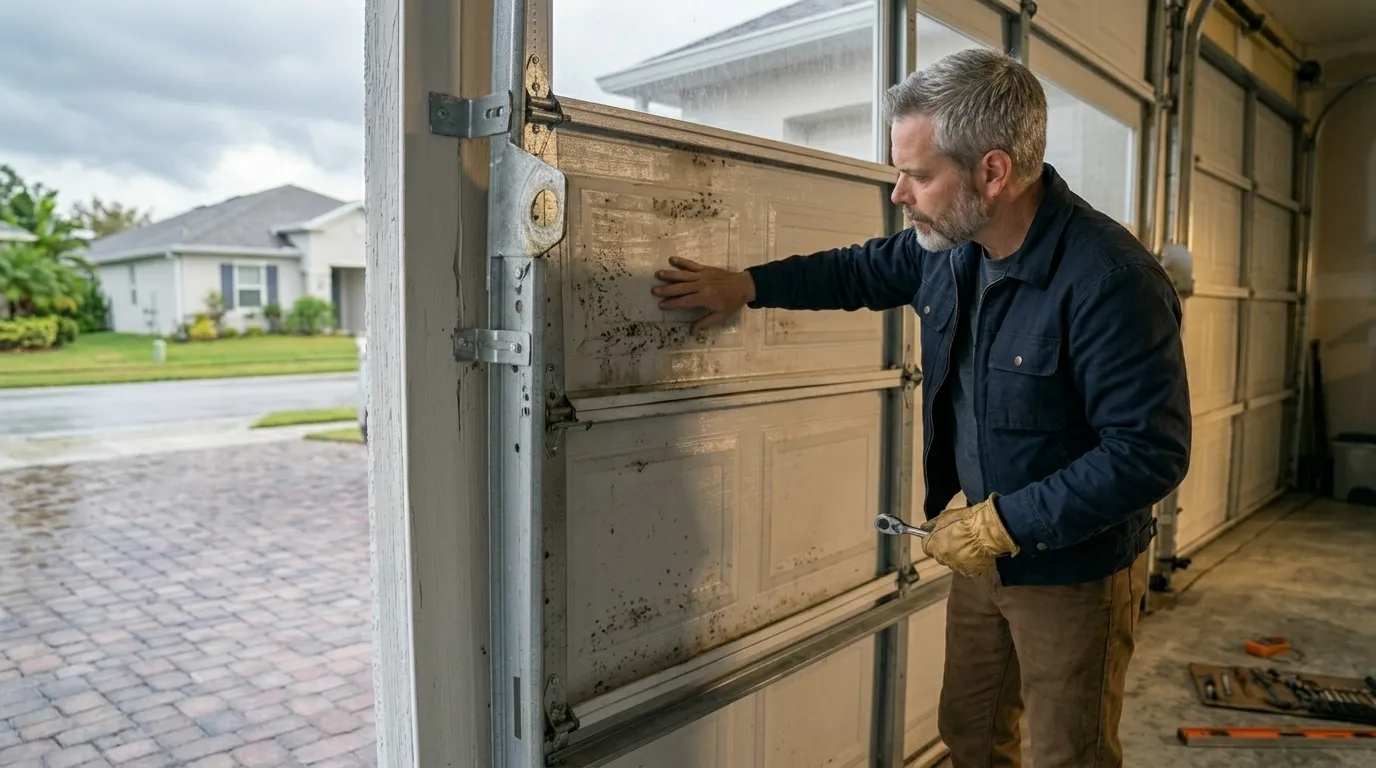
A door that used to open quiet and now sounds like a shopping cart with a bad wheel is telling you the rollers are shot, not the opener. On the 1991-era doors common in Grand Prairie, the original rollers were steel with open bearings - no seal, no lubrication reservoir - and after three decades of heat cycling through the garage, the bearing race wears oval instead of round. That's the grinding on the way up and the shudder on the way down. Some owners notice the door catching about a foot before it seats at the top, usually a roller worn enough to jump the track momentarily rather than ride it smoothly. If only one or two rollers on the bottom section sound different from the rest, that's normal - bottom rollers carry more of the door's dead weight and wear first. If every roller sounds the same, they were probably installed together and are wearing out together, which is common on houses that have never had the hardware touched since the original build.
What the Fix Involves
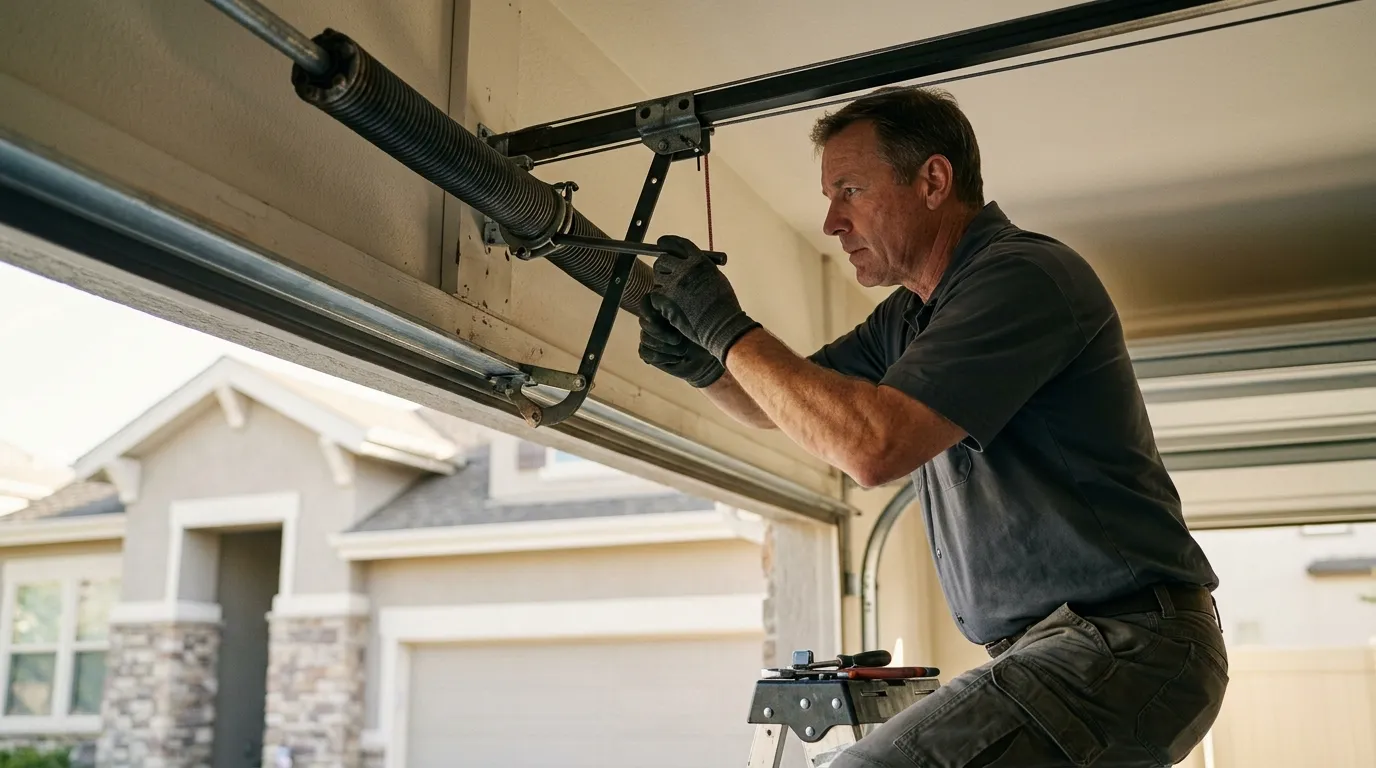
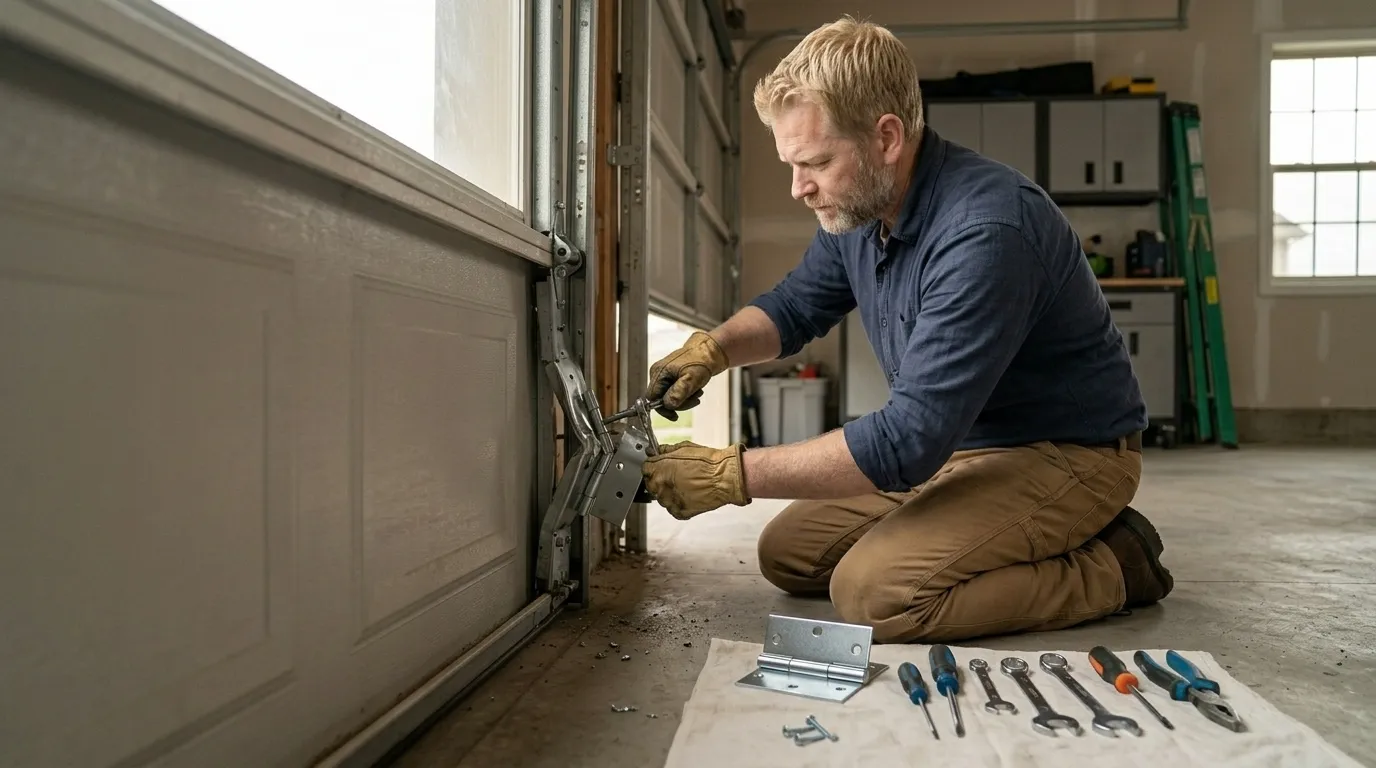
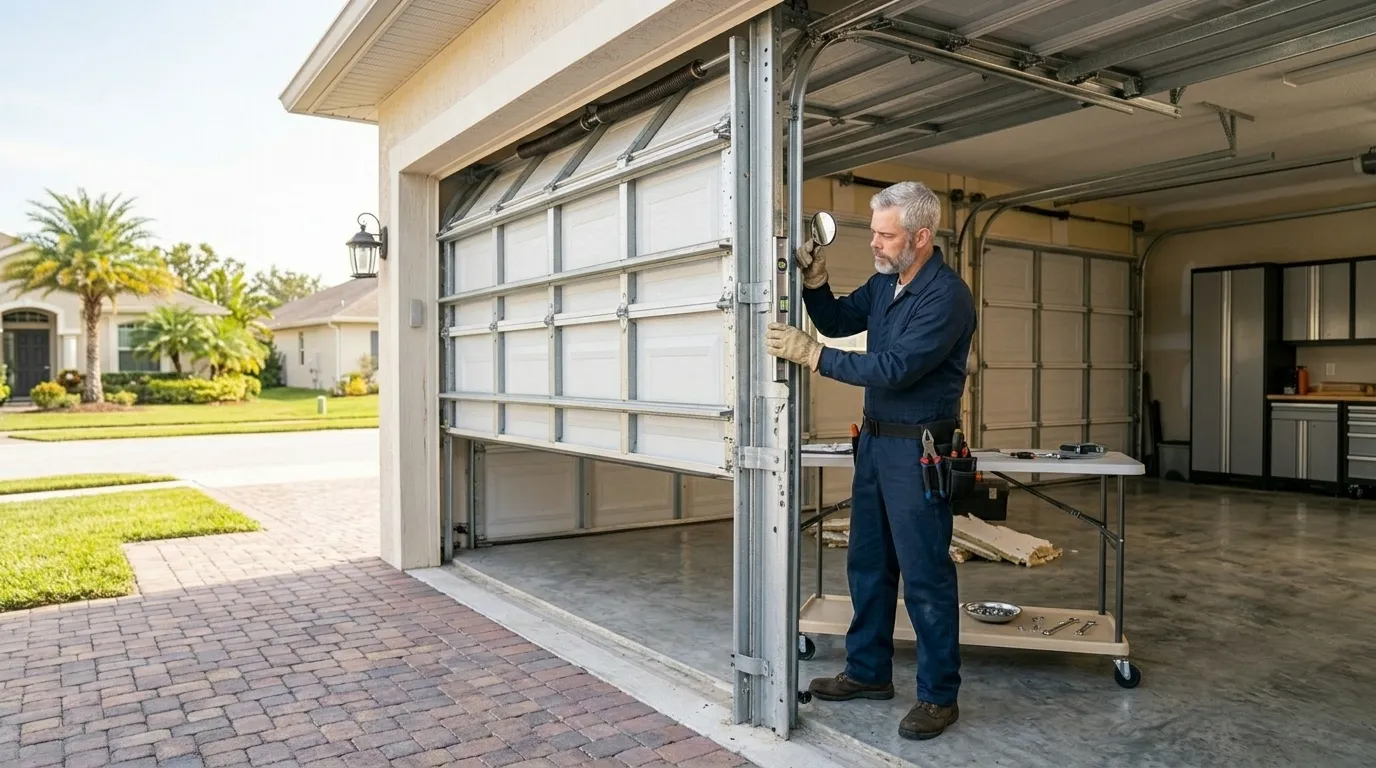
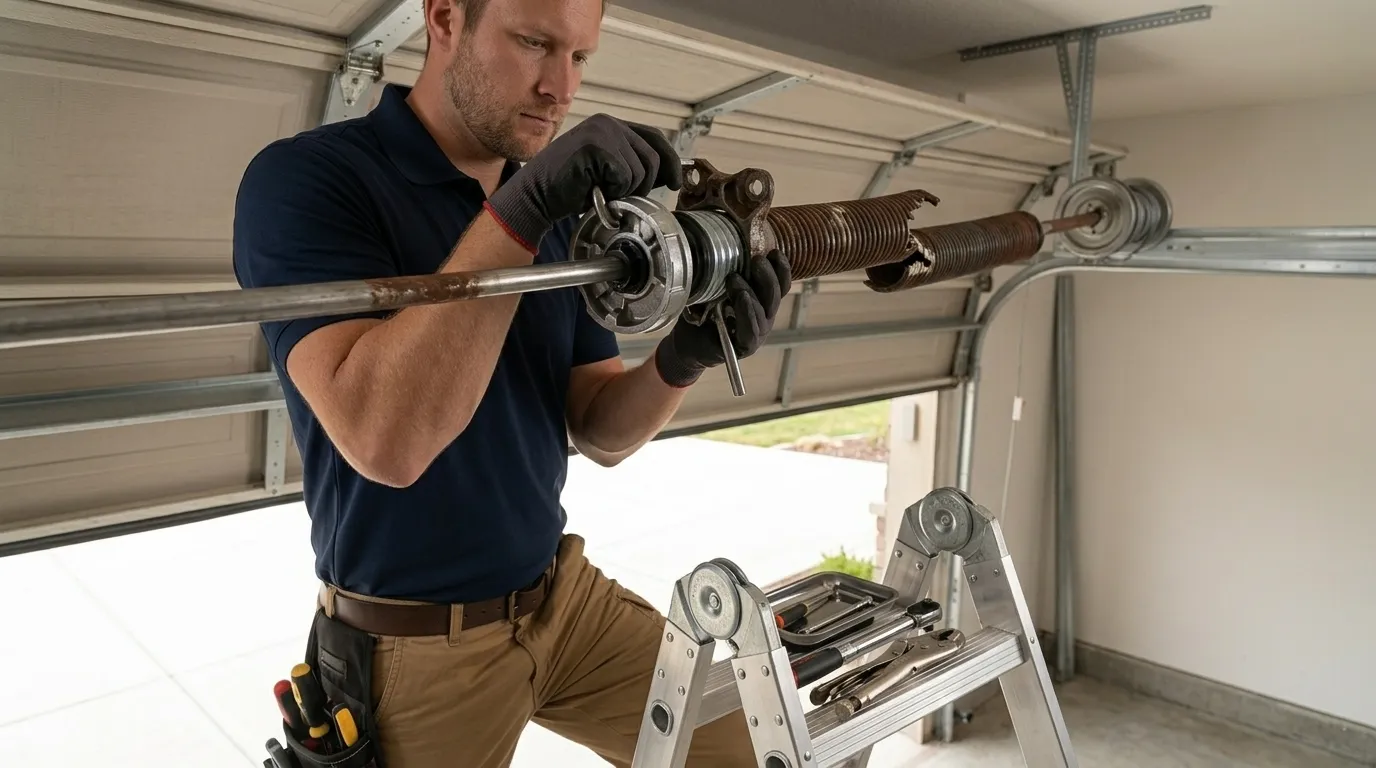
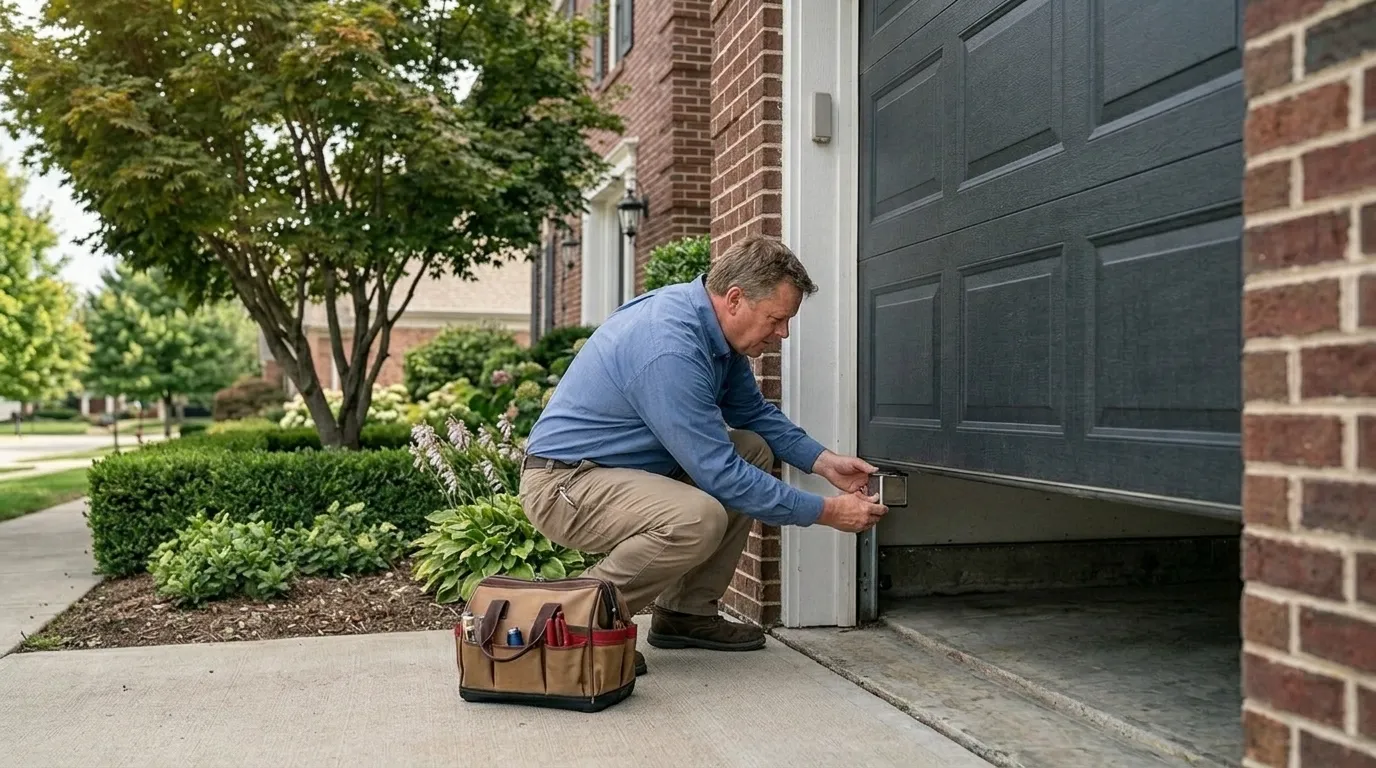
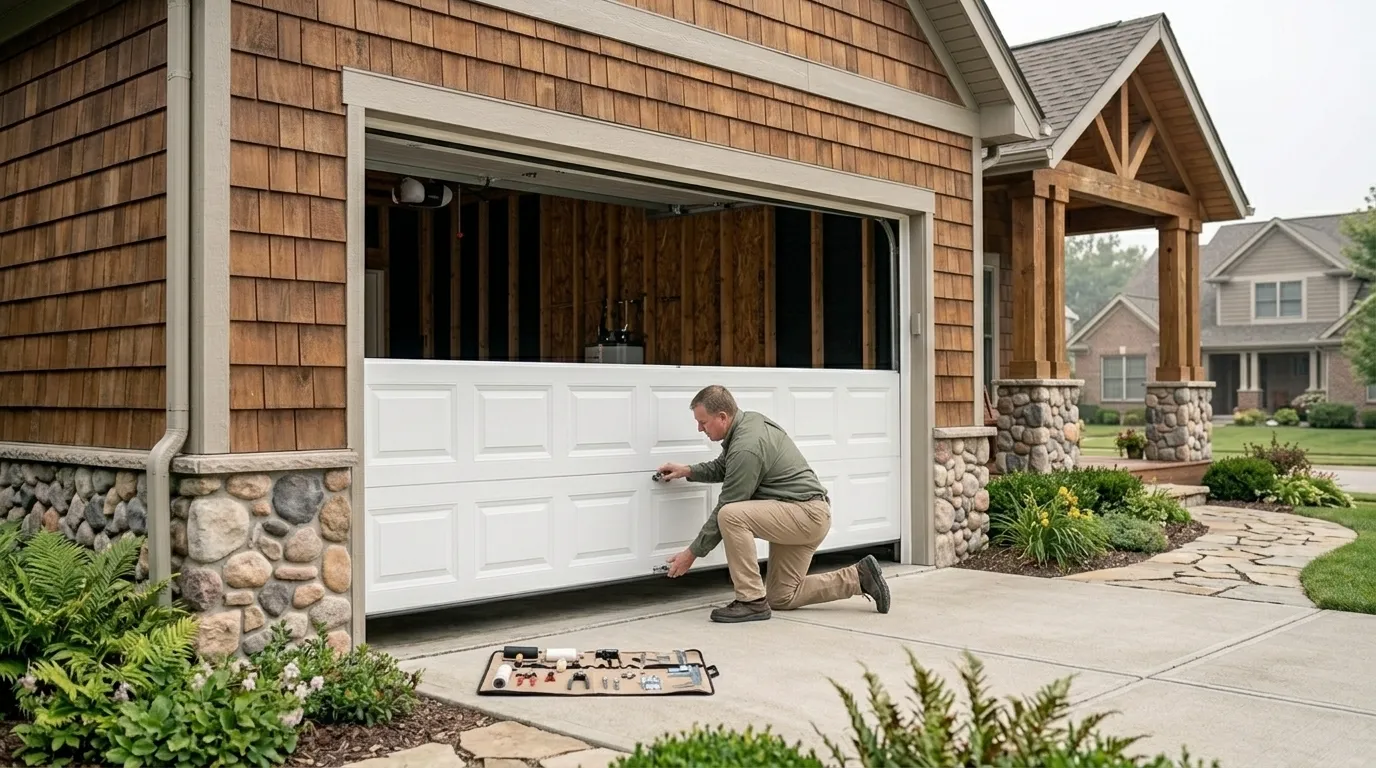
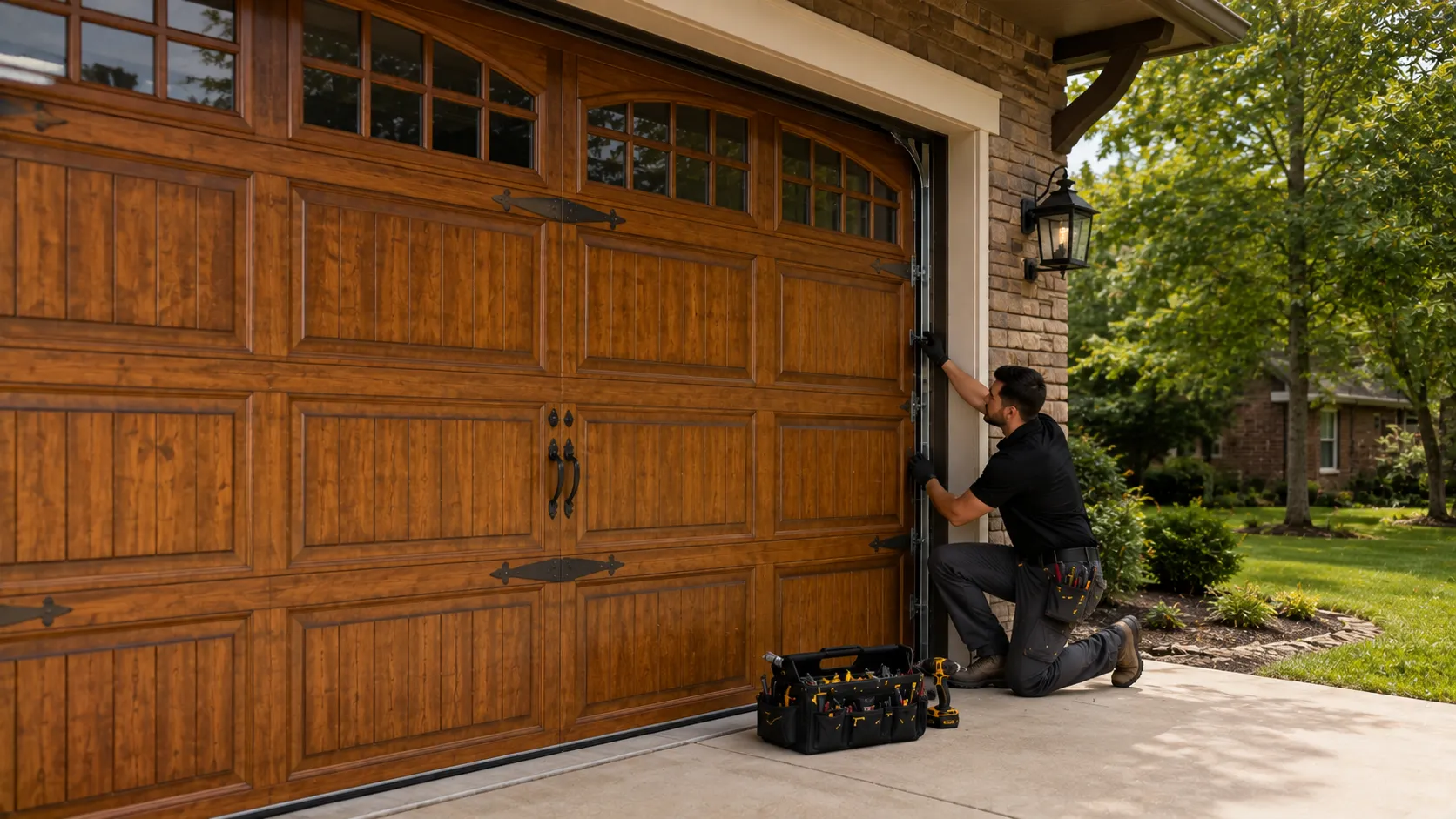
A straight roller swap means backing off the track brackets, pulling the old rollers out of the hinges and end brackets, and setting new ones in place - steel with sealed bearings if you want quiet and long life, nylon if you want quiet and don't mind replacing them again eventually. We check the track alignment on both sides while the door is apart, since a roller job is the easiest time to fix a track that's a little bowed or a bracket that's a little loose. On a torsion-spring door, which is most of what we see on Grand Prairie's newer builds, the spring stays under tension the whole time and doesn't need to be touched for a roller job. One honest limit here: if the track itself is bent badly enough, or the brackets are rusted through, that's a track and bracket job on top of rollers, and we'll say so rather than force new rollers into hardware that can't hold them straight.
Time on the Job
Replacing a full set of rollers on a single door, with a clean track, is usually the shorter end of a service call - it doesn't involve springs, cables under tension, or opener wiring. If the track needs straightening or a bracket needs replacing alongside the rollers, add time for that. Two-car doors with two separate tracks take longer than a single door, mostly because there's twice the hardware to check, not because the roller swap itself is harder. We don't quote a fixed number of minutes over the phone, because we don't know what the track looks like until the door's open and the old rollers are out - a door that's been grinding for months usually has more track wear than one that started making noise last week.