What You Pay
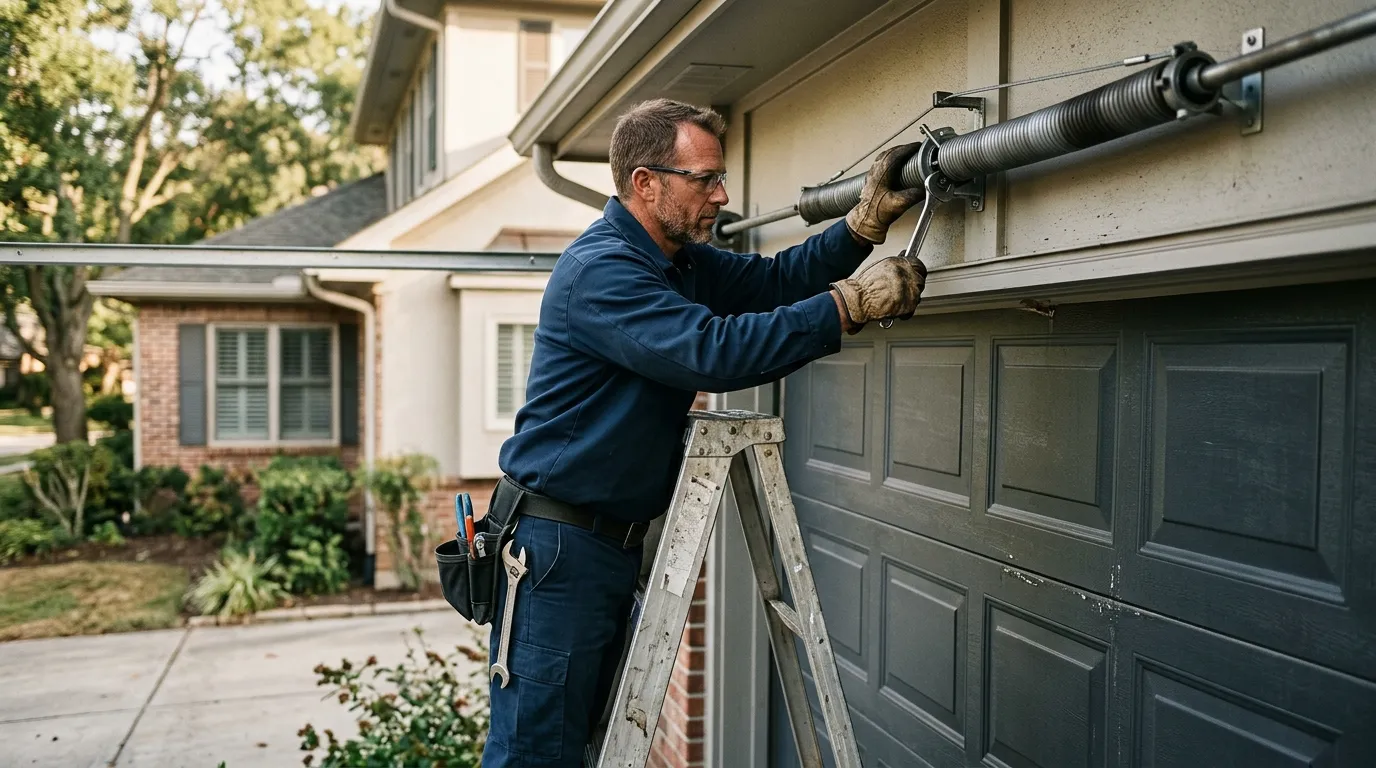
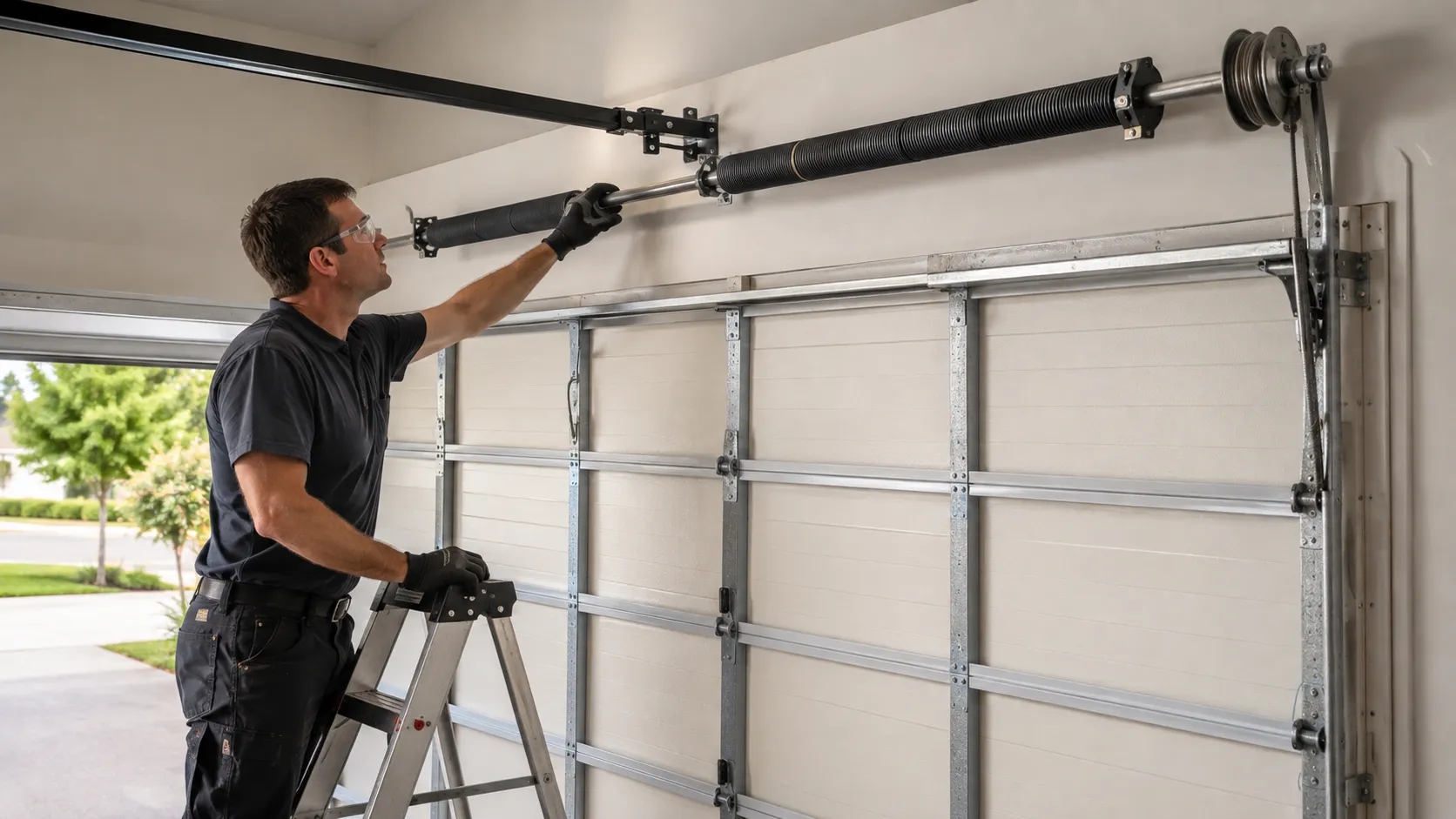
We're not going to hand you a number here that we can't back up. What we can tell you is what shapes the bill on a house built around 1991, which is most of Grand Prairie's stock. Doors from that era almost always run on extension springs mounted along the horizontal tracks rather than the torsion springs standard on newer construction. Extension spring replacement is generally a smaller job than torsion work, both in parts and labor, because the hardware is simpler and the springs themselves are cheaper.
Across the wider service area median household income sits at $83,256; Grand Prairie's own figure runs a bit lower, at $78,889. That gap doesn't set the price of your repair, but it lines up with what we see on the ground: older openers, lighter-gauge steel doors, and fewer upgraded torsion conversions than in some of the newer pockets closer to Dallas. If your door has already been converted to torsion hardware by a previous owner, the job looks more like a newer-build repair and costs accordingly. We quote after we've looked at the actual spring, track, and opener in front of us, not off a website chart.
The Symptom
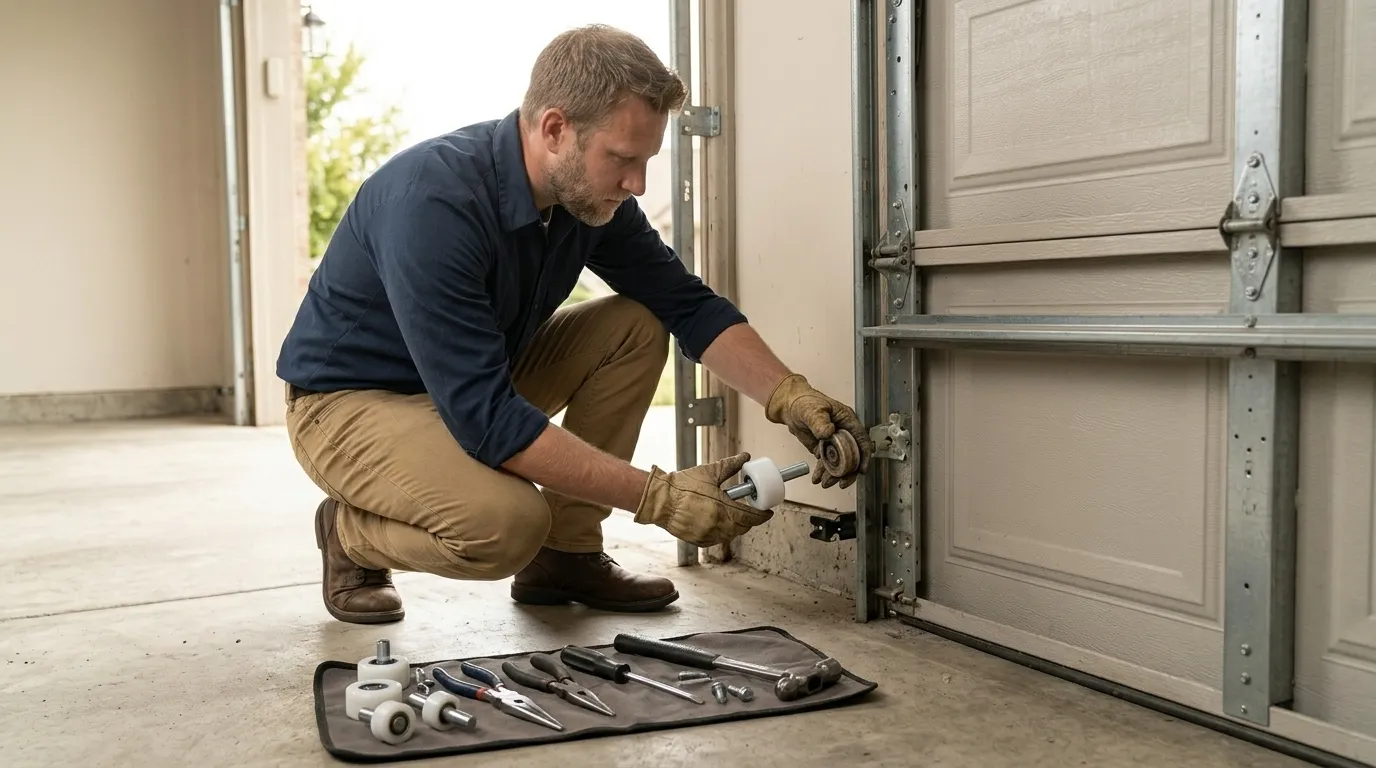
The most common call from this side of the metro is a door that's suddenly heavy on one side, or won't stay up on its own. On a house built in the early '90s, that's almost always an extension spring that's stretched out or snapped, since those springs don't hold their tension as long as torsion springs do. You'll also see rollers that have worn oval instead of round after thirty-plus years of the same door going up and down twice a day, which throws the panel off its track just enough to bind.
A second pattern: openers original to a 1991 build are chain-drive units nearing or past their working life, and when the drive gear wears down the door will run but stutter, or reverse partway up. Neither of these problems is dramatic to fix, but they're specific to houses of this age - a door built in the last ten years with a torsion spring and a belt-drive opener won't show either symptom the same way.
What the Fix Involves
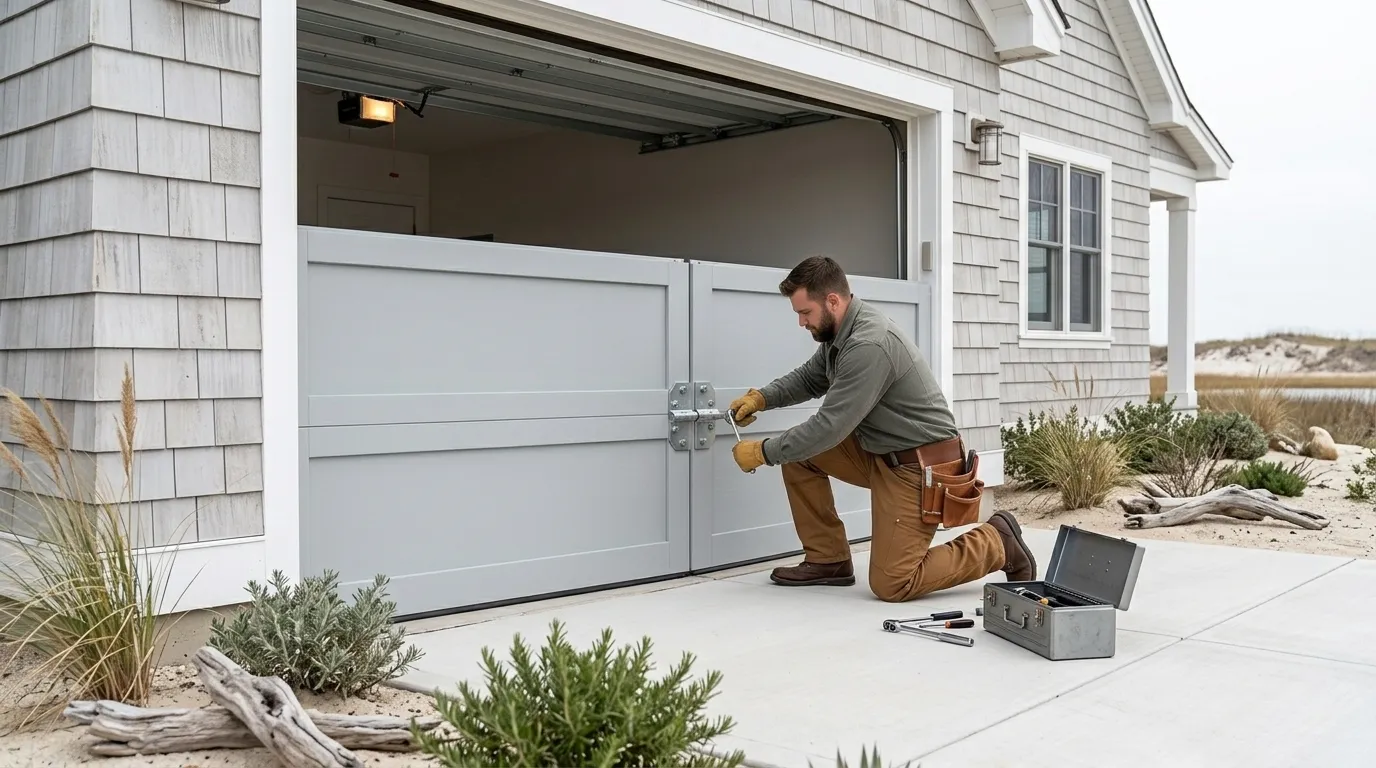
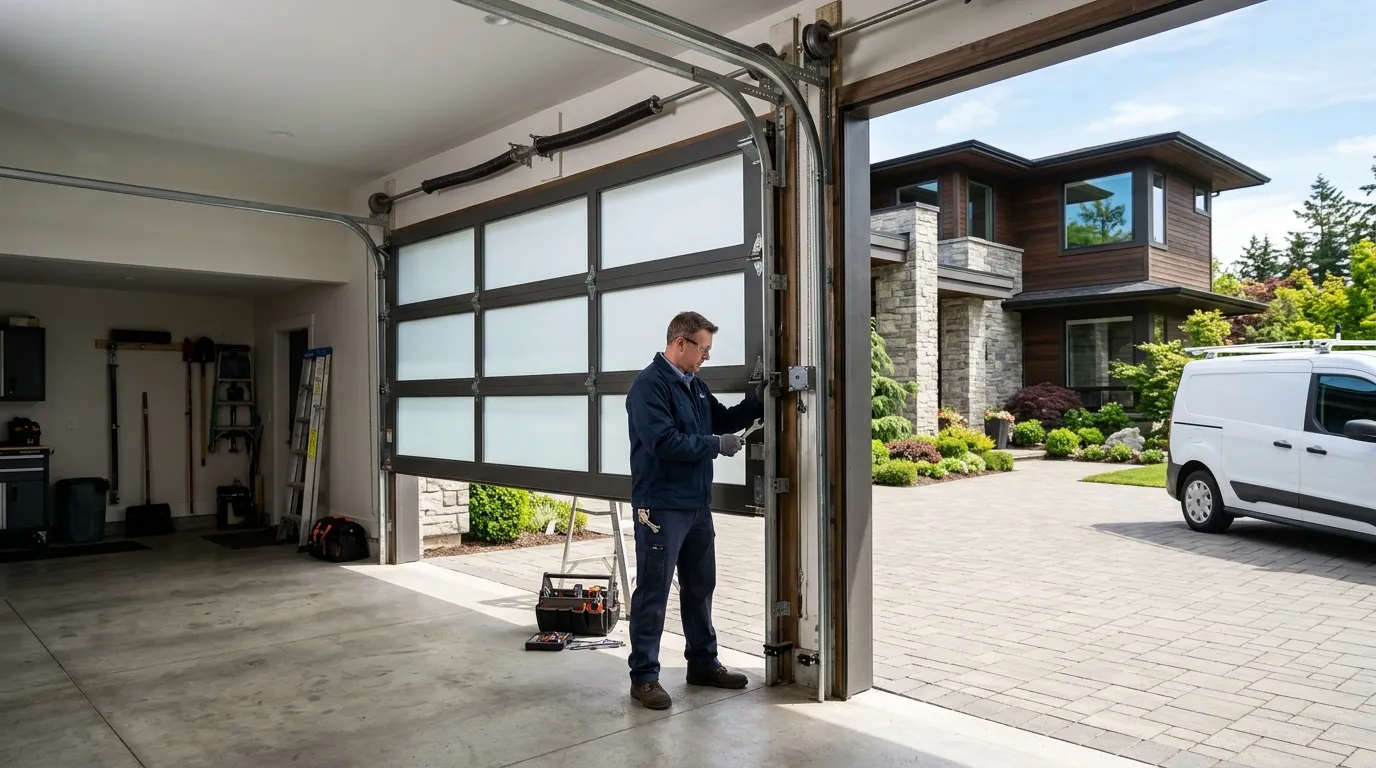
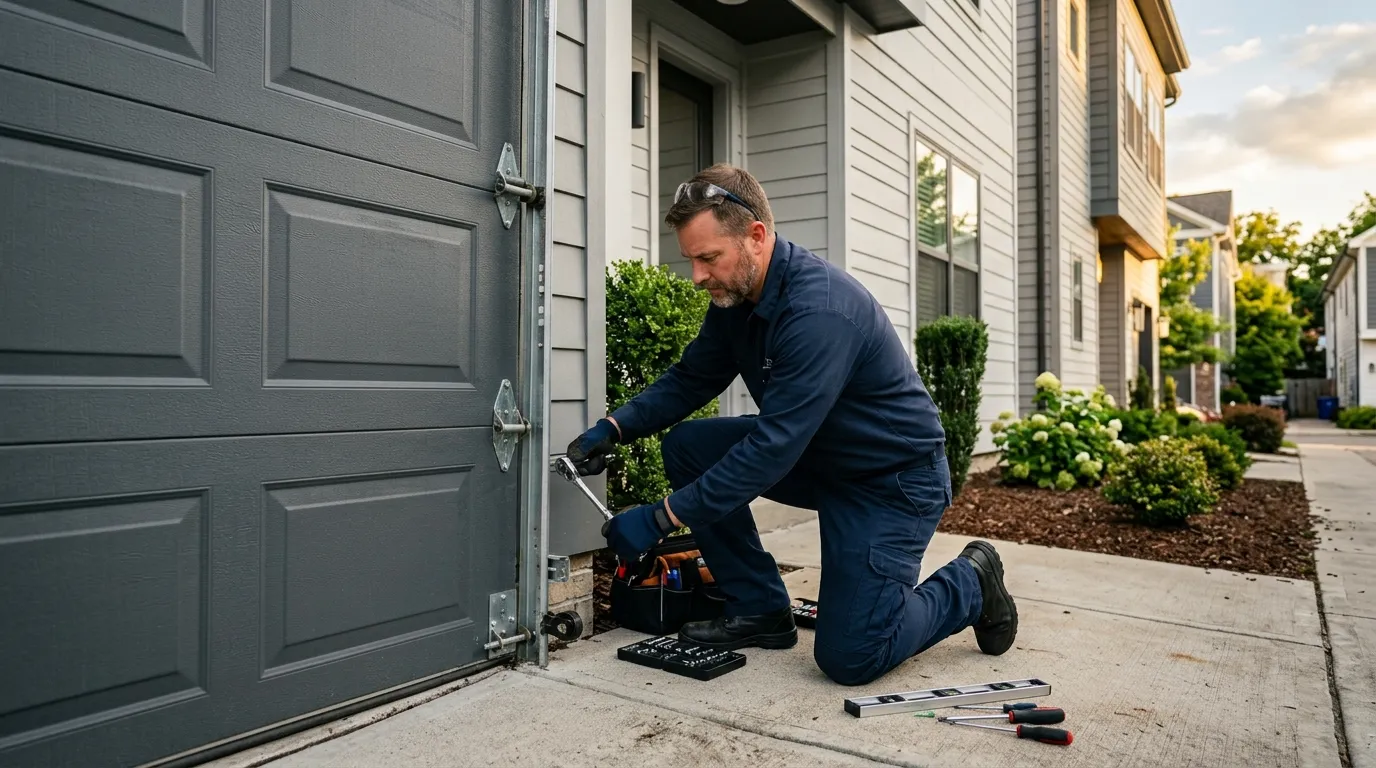
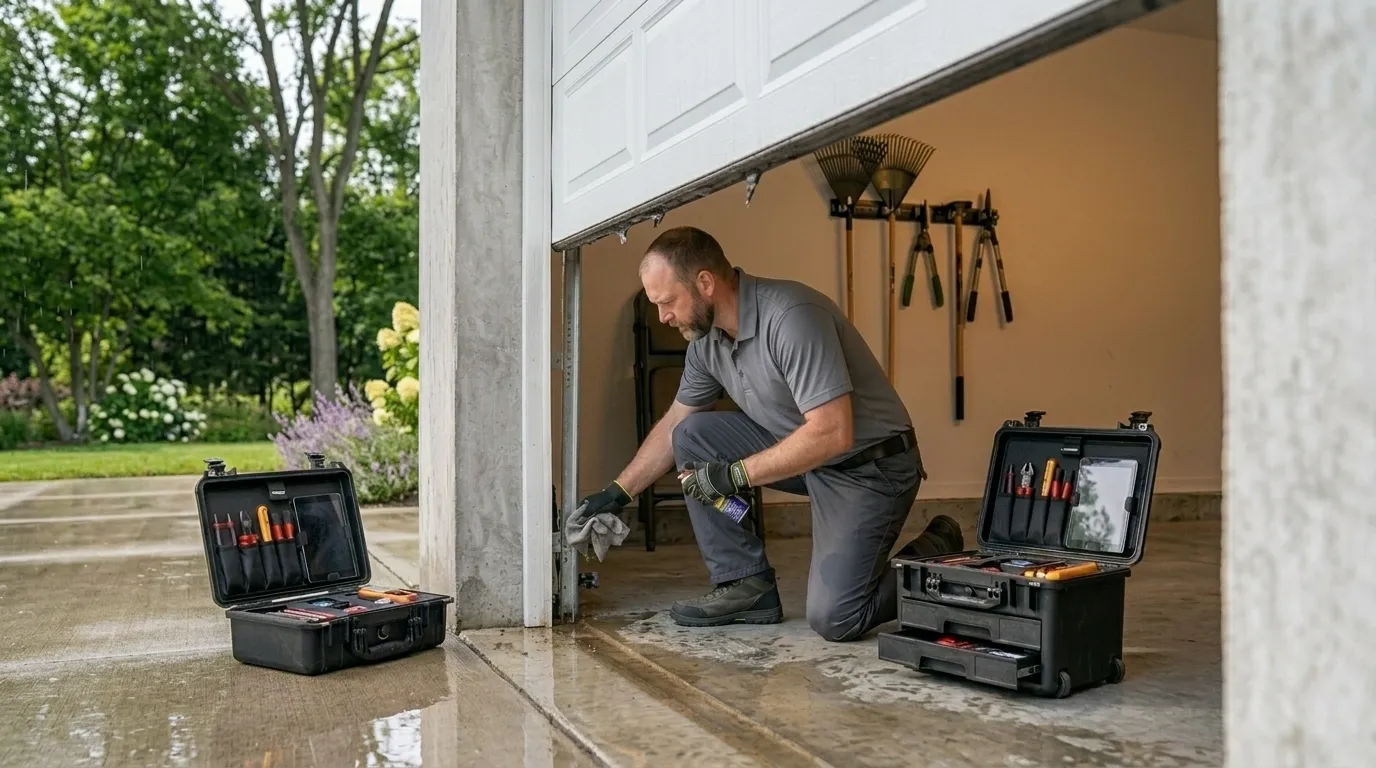
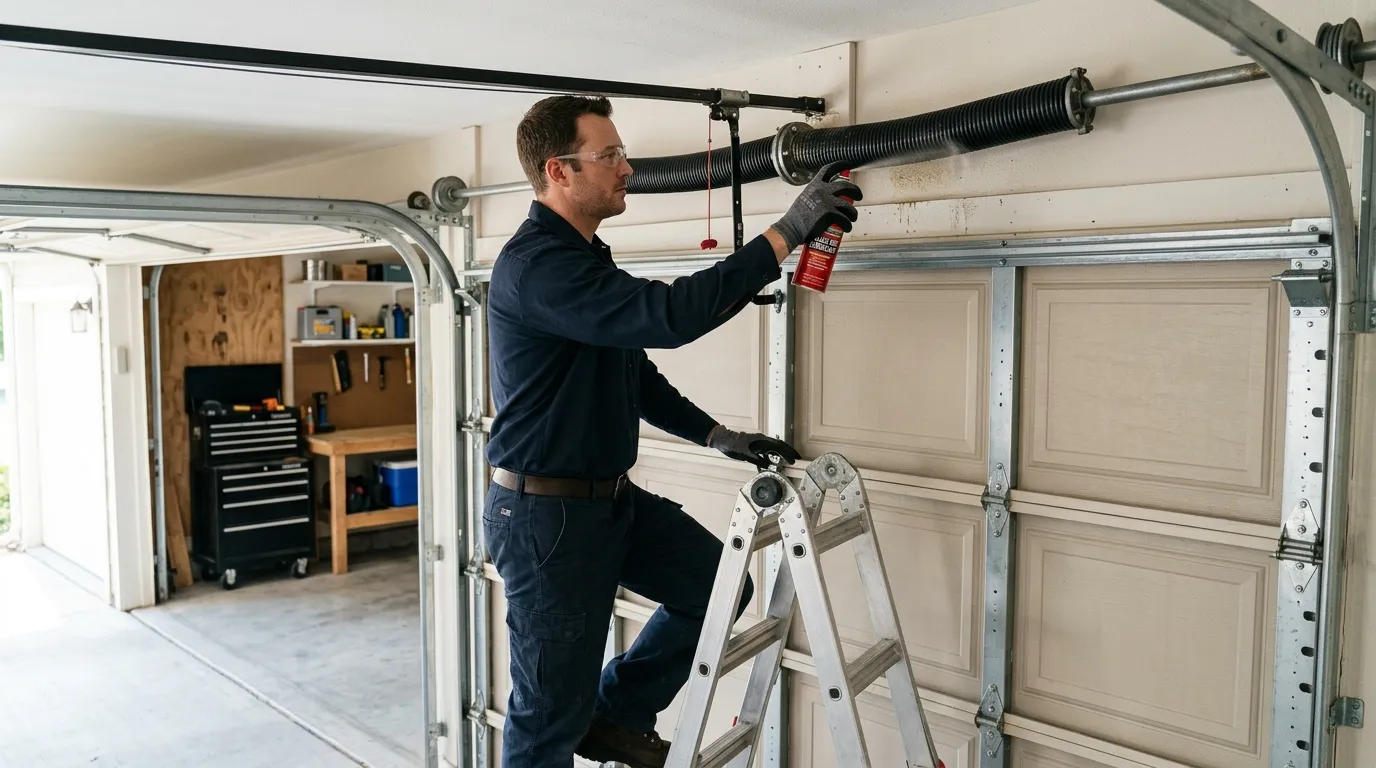
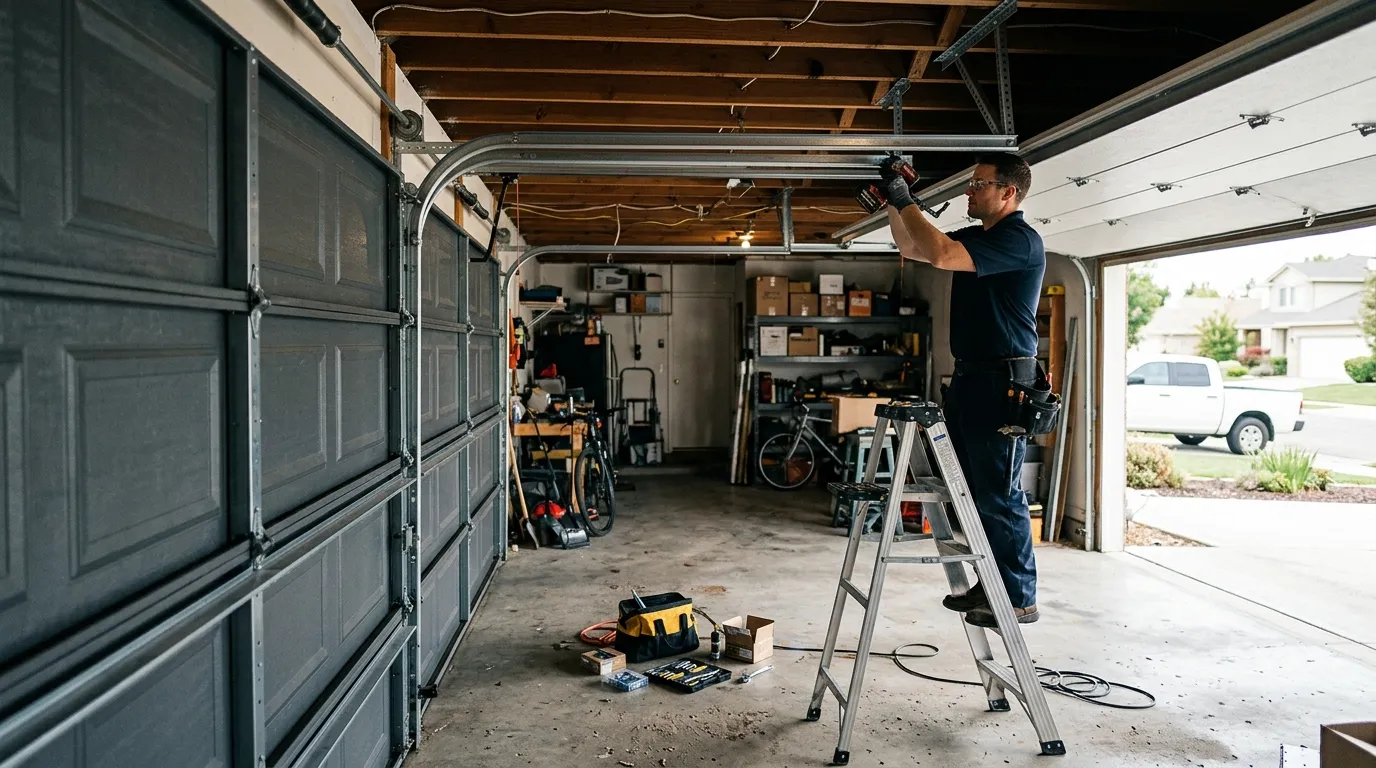
For a spring call, the work is: disconnect the opener, relieve tension on the old extension spring, check the track alignment and pulley condition while the door's open, swap in a spring rated to the door's actual weight, then re-tension and cycle the door a dozen times to check balance. On a 1991-era door that's never had the springs replaced, we'll also check the cables and rollers while we're in there, since they're usually original too and cheaper to swap now than on a second visit.
For an opener that's stuttering or reversing, we check the drive gear, the limit switches, and the sensor alignment before we touch the motor - a lot of calls that sound like a dying motor turn out to be a misaligned safety sensor instead, which is a five-minute fix, not a replacement.
Honest limitation: we don't carry every panel style for doors this old on the truck, so if a panel needs to be sourced rather than repaired, that part of the job waits on a supplier order, not on us.
Time on the Job
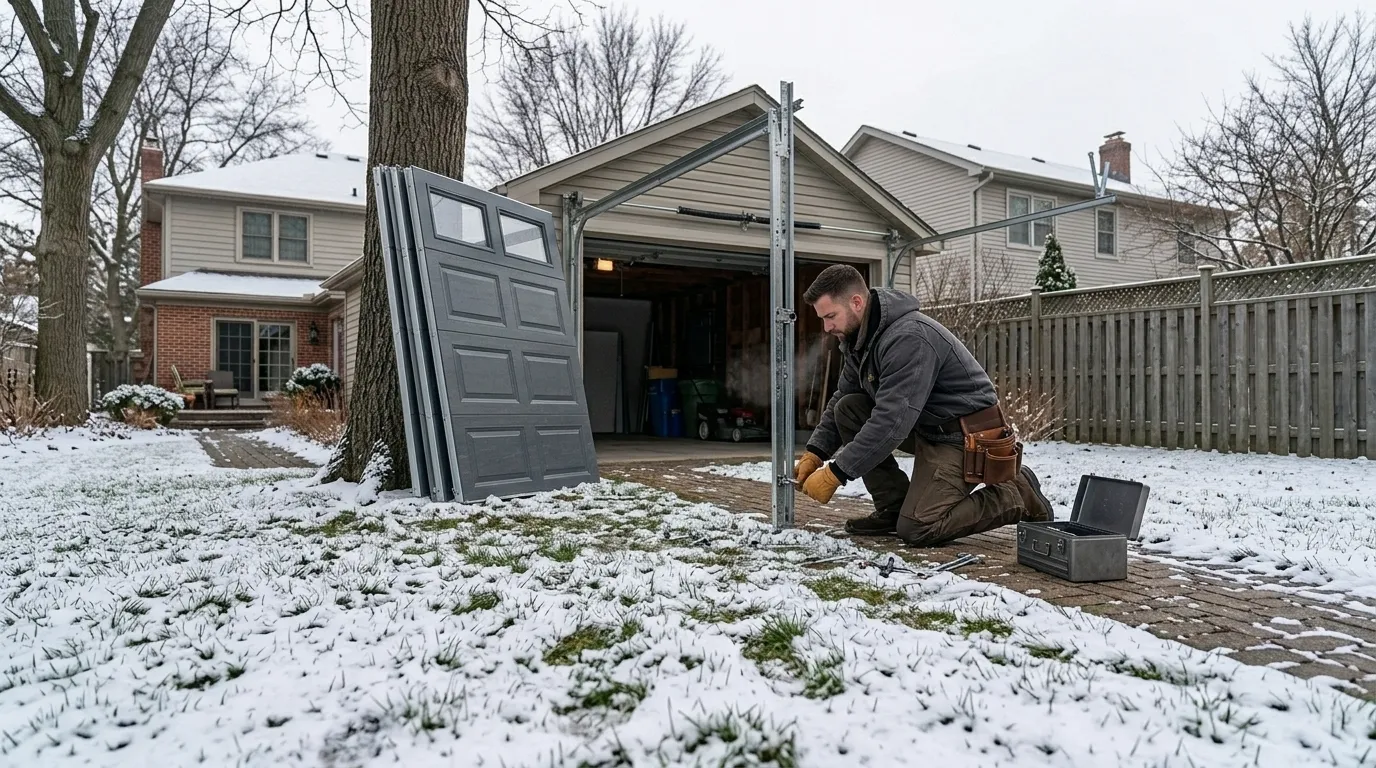
We work out of Dallas, about 16 miles from Grand Prairie, so travel is part of scheduling a visit - we're not claiming a depot around the corner. Once we're on site, a straightforward extension spring or roller job usually takes an hour or so; an opener diagnosis and sensor fix is often quicker than that. Full panel replacement or a track rebuild on an older door runs longer, and if a part has to be ordered because it's not a stock size anymore, that adds days rather than hours before we're back to finish it.
We'd rather tell you the real order of operations than promise a same-day fix we can't back up sight unseen. Most of what we see on 1990s-built houses in this area is spring, cable, and roller work that doesn't need special-order parts, and that's the visit that gets wrapped up in one trip.