What You Pay
We can't quote a number here without looking at the unit - a stripped drive gear on a chain-drive opener costs a fraction of what a fried logic board or a dead motor runs, and in a lot of Grand Prairie houses built around 1991 (the local median year built), you're looking at one of those three depending on which part gave out first. Grand Prairie sits about 16 miles from our Dallas base, and travel is part of scheduling the visit, not part of the repair price. What we can tell you is that once we're on site, the diagnosis tells you exactly what you're paying for before any part gets replaced - no flat 'opener repair' rate that pretends a bad capacitor and a burnt-out motor cost the same. If your opener is original to a house from that early-'90s wave, plan for the visit to include a real look at the gear kit and the board, not just a battery swap and a shrug.
The Symptom
The pattern we hear most from this side of the service area: the opener hums or clicks but the door doesn't move, or it moves a few inches and stops. Sometimes the light blinks and nothing else happens. Sometimes the remote works from ten feet away and not from the driveway. None of that is mysterious once you know the age of the unit doing the work - Grand Prairie's housing stock centers on 1991, which puts a lot of original openers at 30-plus years of continuous duty. Chain and screw-drive units from that era used steel or nylon gears that were never built to run three decades without replacement, and their circuit boards weren't designed for the number of power blips a house sees over that span. A door that reverses on its own, or that only responds to the remote sometimes, is usually a worn gear or a failing board - not a door problem at all, even though that's where most people look first.
What the Fix Involves
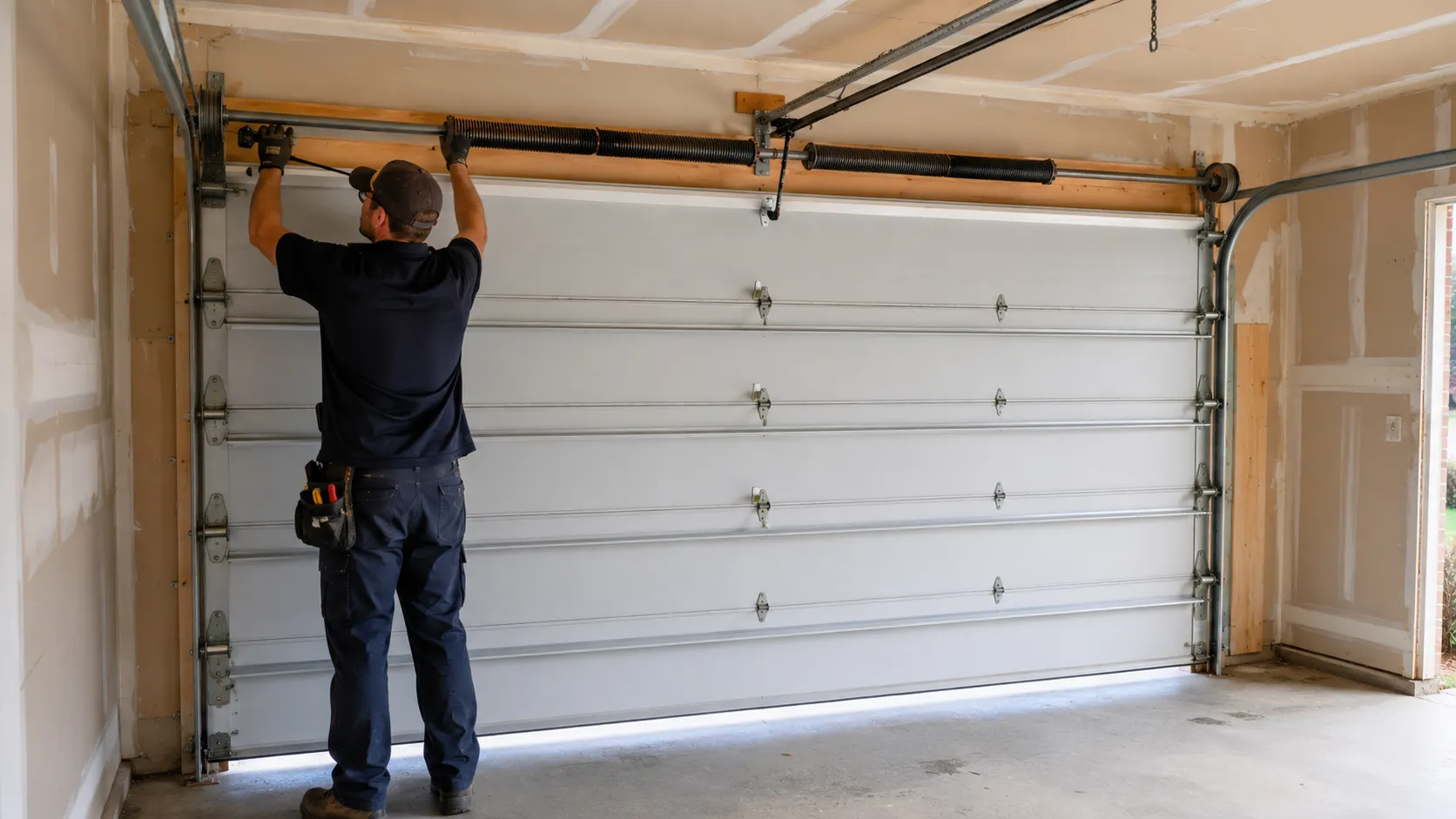
First step is figuring out which of the three usual culprits - motor, drive gear, or logic board - is actually the failure, since an opener built around 1991 vintage housing is old enough that any of the three is plausible on its own. If it's the drive gear, that's a contained job: open the housing, replace the gear kit, check the chain or screw drive tension, and test cycle count under load. If it's the board, that's a swap, and on some older units a compatible replacement board isn't always available off the shelf, which is the honest limit here - parts availability on units this old varies, and sometimes a full opener replacement is the faster and cheaper path once you factor in a board that has to be sourced. If it's the motor itself, replacement of the whole unit is usually the right call rather than trying to keep a 30-year motor running. We tell you which one we're dealing with before any part gets ordered.
Time on the Job
Because this job runs out of Dallas, the appointment includes the drive over - Grand Prairie is about 16 miles out, so plan the visit around that rather than a walk-up same-hour fix. Once we're there, a gear kit swap is a contained repair done in one visit. A full opener replacement, if the motor's gone or a board can't be sourced for the old unit, takes longer since it includes removing the old unit, mounting the new one, and re-syncing the safety sensors and remotes. We won't pretend to give you a time estimate before we've seen which failure this is - a stripped gear and a dead motor are not the same job, even though they can look identical from the driveway.