Can You Do This Yourself
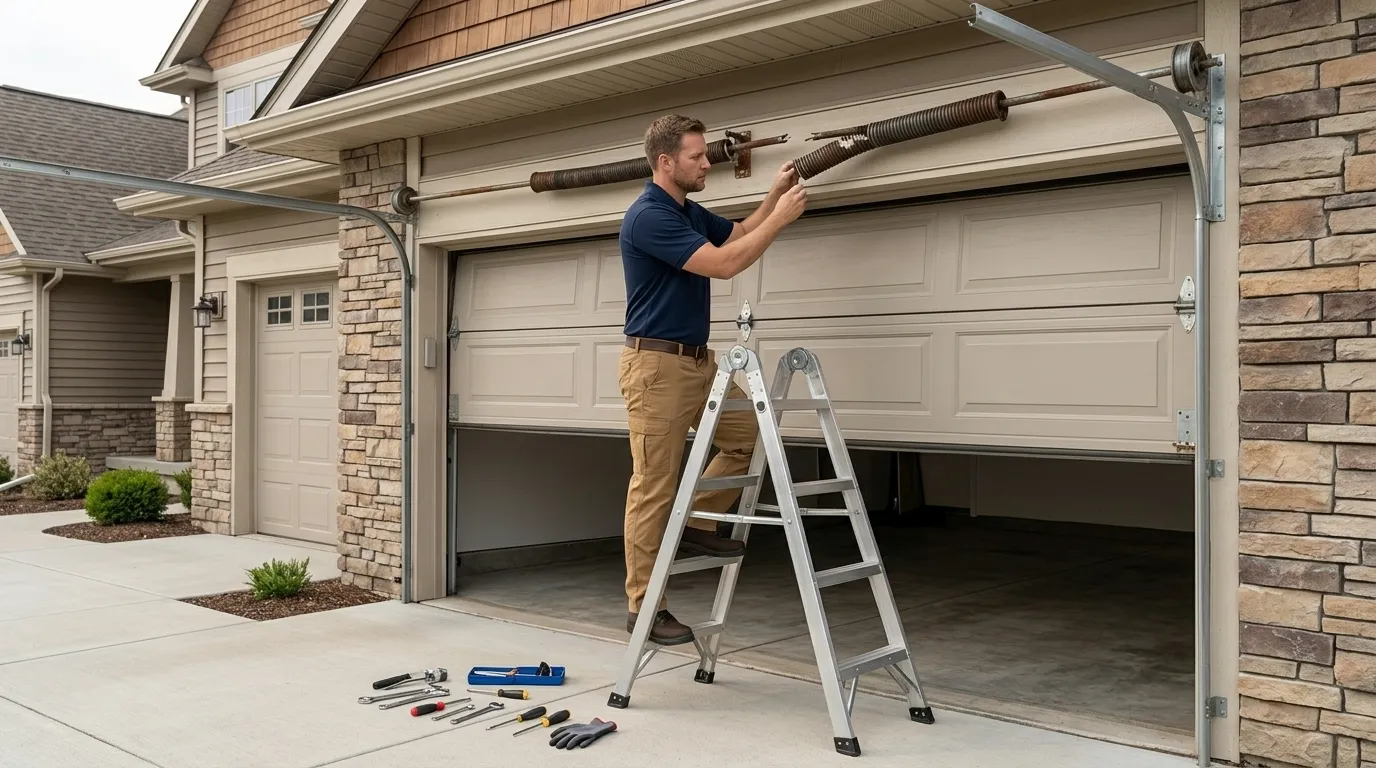
DeSoto has 20,975 households behind it, which tells you something about the commercial stock too: enough warehouses, strip retail, and light-industrial bays to keep a door in daily use, but not the density of a bigger market. That matters because a commercial door here is usually a heavier steel sectional running on a high-cycle torsion spring, not the light residential setup a homeowner might tackle on a Saturday. A torsion spring under load can put someone in the hospital if the winding bar slips. If a cable has jumped the drum or a panel is bent at the track, that is not a YouTube job either - the spring is still loaded even with the door down. What you can safely do yourself: clear the track of debris, check that the photo-eye sensors are aligned and clean, and listen for a grinding or slapping sound before it turns into a stuck door mid-shift. Beyond that, especially on anything with a torsion spring or a commercial-grade opener, call it in.
What Causes It Around Here
Housing and commercial construction across this part of the service area runs 1973 to 2007, with a median year of 1993 - and DeSoto's own stock sits right at that same 1993 mark. That build-out means a lot of the steel sectional doors and openers on commercial buildings here are now old enough that springs are past their rated cycle count and original hardware is starting to fail in clusters rather than one at a time. The climate band for this area runs moderate on heat, which over three decades means seals harden, lubricant on rollers and hinges dries out faster than it would in a cooler market, and steel tracks expand and contract enough to work bolts loose. Put a door from that era through daily commercial cycling - a bay door opening thirty or forty times a shift - and the failure isn't random. It's a spring at the end of its rated life, a cable frayed from a track that's slightly out of plane, or an opener motor that's been drawing more current than it should for a year before it finally quits.
Parts We Carry
For doors from the 1973-2007 stock common in DeSoto, we carry torsion springs sized for standard commercial cycle ratings, steel cable and drum sets, and rollers built for daily-use bays rather than the lighter-duty parts made for a two-car residential door. Commercial openers we stock cover the mid-cycle range most businesses actually run - not the industrial jackshaft units for a distribution center, and not residential chain-drive units either. That's a real limit: if a building needs an industrial-grade jackshaft operator or specialty fire-rated door hardware, that's outside what we keep on the truck, and we'll say so rather than substitute something undersized. For the residential side of DeSoto, see our page at /desoto/garage-door-service/, and for the full run of commercial work we handle out of Dallas, including services not tied to one town, see /commercial-garage-door-dallas-tx.
Time on the Job
We're driving from Dallas to get to DeSoto, 14 miles each way, so we don't quote a same-hour response time here and won't pretend to. What we can tell you is that most jobs on a door from that 1973-2007 era - spring swap, cable replacement, opener change-out - run inside a single visit once we're on site, because the failure patterns on stock that age are well known by now. Parts availability is the honest variable: standard torsion springs and cables we carry on the truck, but if a building has an odd-sized door or an opener model that's been discontinued, that part has to be ordered, and we'll give a real timeline once we know what's needed rather than a number that sounds good on the phone.